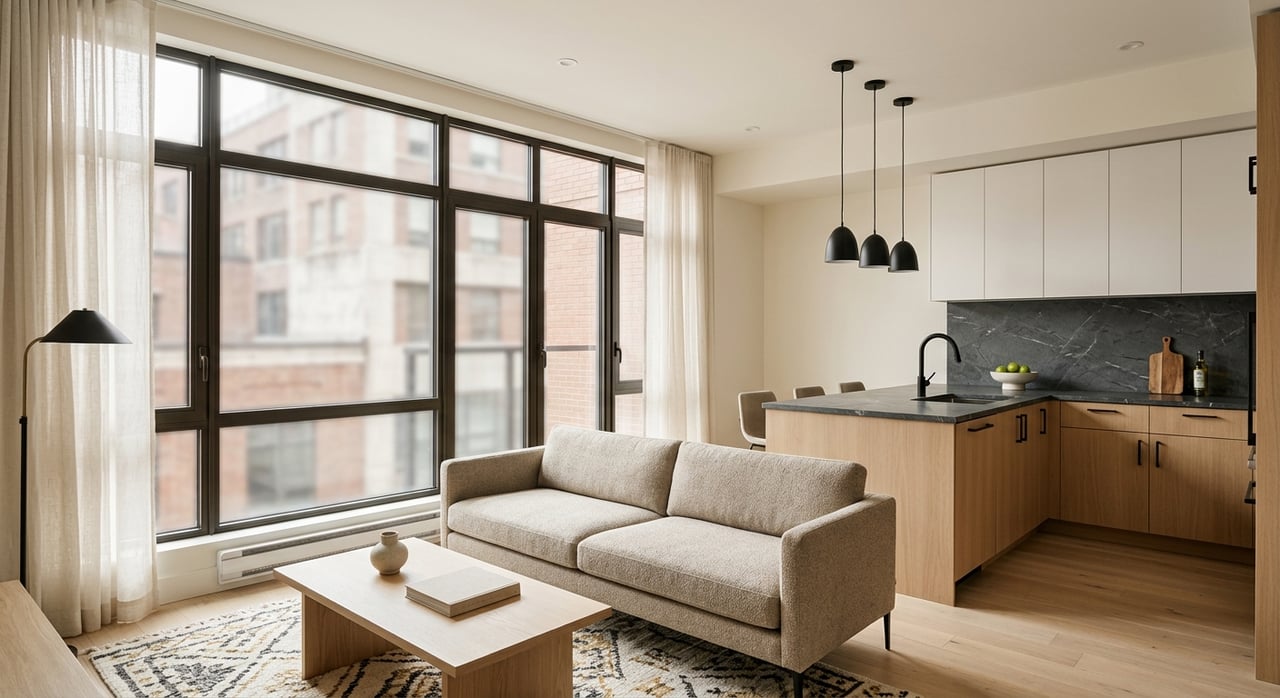
Moving From The Suburbs To A Logan Square Condo
April 16, 2026
April 16, 2026
If you’re thinking about trading a suburban house for a condo in Logan Square, you’re probably weighing one big question: will the convenience be worth the change? That’s a real shift, especially if you’re used to more private space, easier parking, and handling your home on your own terms. The good news is that Logan Square can offer a very different kind of ease, one built around walkability, transit access, and lower day-to-day exterior maintenance. Let’s dive in.
Logan Square offers a true city-living experience in the heart of Philadelphia. According to Visit Philadelphia’s Logan Square neighborhood guide, the neighborhood stretches from Market Street to Spring Garden Street and from Broad Street to the Schuylkill River, with a mix of offices, luxury high-rises, and both modern and historic homes.
For many buyers coming from the suburbs, the biggest draw is convenience. The Benjamin Franklin Parkway, museums, Sister Cities Park, Logan Circle, and Schuylkill Banks access all help create a neighborhood where daily life can feel more connected and less car-dependent.
That walkable lifestyle is a major part of the appeal. Logan Square has a Walk Score of 95, which supports the idea that errands, dining, and commuting can often happen without getting in your car.
Moving from a suburban house to a condo is not just a location change. It is also a shift in how your home is maintained, what you pay each month, and how much control you have over certain decisions.
In a detached home, you usually handle exterior repairs, landscaping, and major systems directly. In a condo, some of that responsibility typically moves to the association. Fannie Mae explains that condo fees often support exterior and common-area maintenance and may also cover water, sewer, trash, insurance, reserve funds, and amenities.
That can be a welcome tradeoff if you want less upkeep. At the same time, it means you need to look beyond the listing price and understand the full monthly cost of ownership.
One of the biggest surprises for suburban buyers is that condo costs can be more layered than they first appear. Your mortgage is only one part of the picture.
The CFPB notes that HOA and condo dues are usually paid separately from your mortgage, and they can range from a few hundred dollars per month to more than $1,000. In Logan Square, recent listing examples show just how wide that spread can be, from roughly $200 per month to nearly $1,500 per month depending on the building, age, service level, and amenities.
If you are leaving a suburban home, this is often the core tradeoff. You may reduce maintenance and gain services, but you may also take on a higher fixed monthly bill.
Philadelphia’s Real Estate Tax rate is 1.3998% of assessed value, and taxes are due March 31 each year. If you will occupy the condo as your primary home, the city says the Homestead Exemption reduces taxable assessed value by $100,000, with most homeowners saving up to $1,399 per year starting in 2025.
The city also offers relief programs for qualifying households, including payment agreements, installment plans, and certain freeze programs. If budget predictability matters to you, it is worth reviewing these programs early in your planning process.
Philadelphia also has a Realty Transfer Tax of 4.578% of the sale price or assessed value plus assumed debt. The tax is typically split between buyer and seller, though that split is negotiable.
On a $399,000 purchase, the total transfer tax would be about $18,266 before any negotiated split. That is a major number, and it should be part of your upfront budget planning from day one.
Parking tends to feel simple in the suburbs and much more nuanced in the city. If you are considering Logan Square, this is one detail you do not want to gloss over.
Some condos include private parking, some offer garage spaces, and some rely on street parking only. Even when parking exists, you need to verify whether the space is deeded, assigned, rented separately, or not included with the unit.
Philadelphia also offers residential parking permits in certain areas, which can help in blocks where street parking is limited. If you plan to keep a car for work, family visits, or weekend travel, parking should be part of your decision early, not after you fall in love with a unit.
One of Logan Square’s strongest advantages is access. Visit Philadelphia notes that the neighborhood is close to Suburban Station, and also near City Hall, where key SEPTA subway lines connect.
For many buyers, that means commuting becomes simpler and more flexible. It can also make car-light living more realistic, especially if most of your weekly destinations are in Center City.
There is also a lifestyle benefit here. Schuylkill Banks adds riverfront trail access and a 2,000-foot boardwalk, giving you options for walking and biking that may not have been part of your suburban routine.
Even if you plan to stay for years, resale still matters. A condo is both a home and a financial decision, so it helps to look at Logan Square with a long-term lens.
Current market data suggests buyers should not assume a fast resale. Redfin’s Logan Square condo data shows 36 condos for sale with a median listing price of $394,000 and a median of 71 days on market.
That points to a market where pricing discipline and building quality matter. In other words, the location is attractive, but your future resale value may depend heavily on the building’s condition, fee structure, amenities, and overall appeal to the next buyer.
Condo purchases usually require more review than detached homes. You are not just buying the unit. You are also buying into a shared building structure and association.
Fannie Mae recommends reviewing the condo bylaws and CC&Rs, asking about reserve funds, special assessments, insurance coverage, parking, and allowed modifications. Lenders may also review the project’s financial stability, condition, debts, lawsuits, and inspection history.
This is where careful guidance matters. A condo with a strong association can support your ownership experience, monthly predictability, and future financing options. A weak one can create risk even if the unit itself looks great.
If you’re moving from the suburbs to Logan Square, these are some of the most useful questions to ask as you compare condos:
These questions help you move past surface-level features and focus on how the condo will actually function in your daily life.
At its best, a move to Logan Square can simplify your lifestyle in a very meaningful way. You may give up a yard, extra storage, or more private outdoor space, but gain walkability, access, and a more streamlined ownership experience.
The key is making sure the numbers and the building support that lifestyle. Monthly dues, taxes, transfer tax, parking, and association health all deserve the same attention as finishes, views, and layout.
If you want a clear-eyed plan for making that move, working with an advisor who understands both the lifestyle shift and the financial side can make the process much smoother. When you’re ready to explore Logan Square condo options, connect with Evangeline Gambardella for thoughtful, data-driven guidance tailored to your move.
Stay up to date on the latest real estate trends.
Every client deserves to feel valued, heard, and supported. From our first conversation to the final handshake, my goal is to ensure your experience is as smooth and special as the moment. Your happiness isn’t just a priority—it’s the standard.

EVANGELINE GAMBARDELLA
728 S Broad St 3rd Fl Philadelphia PA 19146